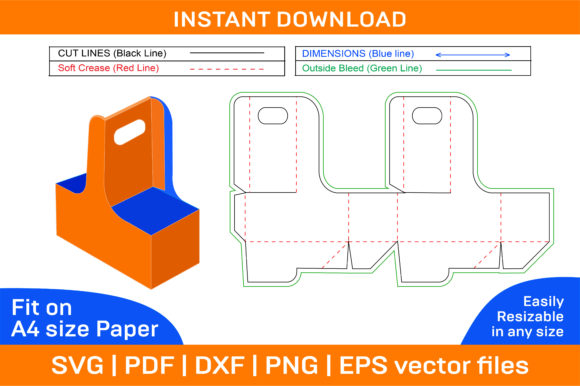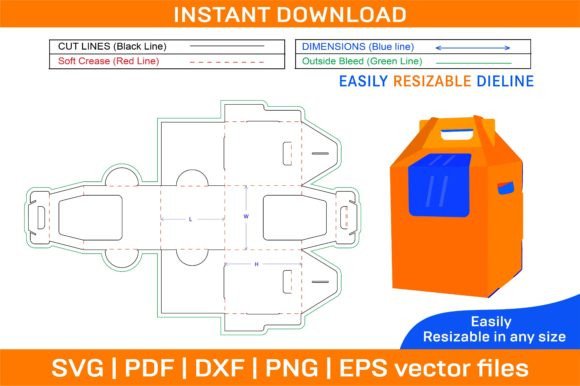
Cardboard Carry Box with Handle Dieline
When I sit down to review a new embroidery design, my first question is always practical: does this actually work in the hoop? It is not enough for a file to look pretty on a screen. As someone who has spent years producing custom apparel and handmade goods for clients, I know that the gap between a digital graphic and a stitched reality can be wide. That is why I approach every machine embroidery design with a critical eye, looking for clarity, balance, and commercial viability. Today, I am evaluating the Cardboard Carry Box with Handle Dieline, a design that falls under the broader categories of Print Templates and Graphics but functions primarily as an embroidery file. My goal here is to determine if this asset deserves a spot in your library or if it belongs in the "maybe later" folder.
The First Impression: Structure Meets Whimsy
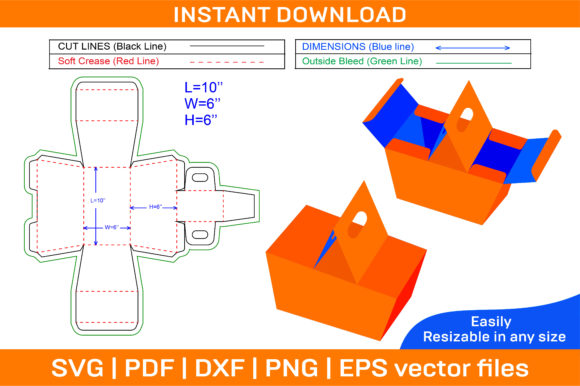
The moment you open the file, the visual personality of the Cardboard Carry Box with Handle Dieline stands out. It is not an abstract pattern or a generic floral motif; it is a specific object rendered in a stylized way. The design captures the essence of a retail package—the kind you might find in a boutique or receive as a thoughtful gift. For designers who specialize in lifestyle branding, this immediate recognition is powerful. It evokes feelings of anticipation, unboxing, and care.
From a layout perspective, the design feels balanced. The handle arches naturally over the body of the box, creating a contained shape that is forgiving for beginners but satisfying for experts. The mood is warm and inviting, leaning towards rustic charm rather than sleek modern minimalism. This makes it an excellent candidate for businesses that want to project a handmade, artisanal image. Whether you are decorating a tote bag or stitching onto a kitchen towel, the subject matter suggests utility and celebration simultaneously. It is a versatile piece of art that feels at home in a craft fair booth or a high-end Etsy listing.
Real-World Application: Where This Design Shines
In my experience, the success of an embroidery project often depends on matching the design to the right substrate. The Cardboard Carry Box with Handle Dieline performs exceptionally well on flat, stable fabrics. I see its greatest potential in custom apparel and accessories that serve as promotional tools or personal gifts.
Imagine a small business owner preparing merchandise for the holidays. Stitching this design onto a heavy cotton canvas tote bag creates an instant brand statement. The box becomes a metaphor for the product inside, reinforcing the idea of quality packaging. Similarly, for those selling baby clothes or nursery decor, the design offers a sweet, nostalgic vibe. It works beautifully on muslin swaddle blankets or hooded towels, where the softness of the fabric contrasts nicely with the structured lines of the box.
I also envision this design thriving on aprons and tea towels. The theme of "carrying" and "packaging" aligns perfectly with kitchen aesthetics. When used as an embroidered patch or applied to a cap, the design adds a touch of playful professionalism. It is not just a decoration; it is a conversation starter. Customers often gravitate toward designs that tell a story, and this one tells a simple tale of giving and receiving. For digital product sellers, including this in a printable mockup series allows buyers to visualize how their own branded boxes might look when personalized with embroidery.
Technical Considerations and Potential Pitfalls
However, no design is without its challenges, and the Cardboard Carry Box with Handle Dieline requires some technical finesse to execute properly. The most critical factor is stitch density. Because the design mimics a physical object, it likely relies on fill stitches to create the surface of the box. If the stitch density is too high, the fabric may pucker, especially on lighter materials like thin cotton or linen. Conversely, if it is too low, the texture may look sparse and lose its definition. Before committing to a large production run, it is essential to test the design on scrap fabric to ensure the tension is balanced.
Fabric choice is equally important. Textured fabrics, such as bouclé or heavy denim, can obscure the finer details of the handle and the edges of the box. In these cases, the design might lose its crispness. Thin or stretchy fabrics present another risk; without proper stabilization, the weight of the thread could cause distortion. I strongly recommend using a cut-away stabilizer for woven fabrics and a tear-away for non-wovens, depending on the final garment's needs.
Another area requiring caution is color contrast. The design likely features outlines or shading that depend on clear distinction between threads. On dark fabrics, light thread colors might get lost, while on white fabrics, darker threads might appear harsh. Testing the design in black and white mockups can help you assess the value range and ensure readability. Additionally, if you plan to use this for commercial embroidery projects involving frequent washing, consider the durability of the satin stitches around the handle. Loose ends or weak anchor points can lead to unraveling over time, which reflects poorly on the maker.
Designer’s Checklist for Success
- Test First: Always stitch a sample on the exact fabric you intend to use. Check for puckering, thread breaks, and alignment issues.
- Verify Licensing: Confirm whether the license allows for commercial sale of finished products. This is crucial for Etsy sellers and small shop owners.
- Optimize Thread Colors: Choose threads that complement the cardboard aesthetic—warm browns, creams, and soft grays often work best to enhance the natural look.
- Check Hoop Size: Ensure your machine’s hoop is large enough to accommodate the design without cutting off parts of the handle or box.
- Inspect Details: Zoom in on the digital file to check for tiny lettering or intricate corners that might become muddy when stitched.
Final Verdict: A Solid Asset for Versatile Projects
After reviewing the Cardboard Carry Box with Handle Dieline from multiple angles, I find it to be a strong addition to any designer’s toolkit. It bridges the gap between functional packaging and decorative art, offering a unique angle for customization. While it demands careful attention to fabric selection and stitch settings, the payoff in terms of customer engagement and product appeal is significant. It is not merely a graphic; it is a complete embroidery project waiting to happen.
For hobbyists looking to create personalized gifts, this design provides a charming focal point. For entrepreneurs, it offers a scalable concept that can be adapted across various product lines, from apparel to home decor. By understanding its strengths and respecting its technical requirements, you can transform this digital file into a tangible, high-quality finished product. The key lies in preparation: test thoroughly, choose wisely, and let the design speak for itself. When executed correctly, the Cardboard Carry Box with Handle Dieline is more than just an embroidery file—it is a testament to the care and creativity that goes into handmade goods.